
Once Upon a Time in Sokoto is a fascinating and very significant piece of theatre about Islam and colonialism: a Caliphate in Africa which becomes modern Nigeria. It charts the life of protagonist, Zinari, a twenty-year-old slave owner, and Hadiru who was introduced to her by her Muslim father. This play pulsates with life and vibrancy from the opening scene to the final lines. I was totally immersed in it from the outset through every twist and turn to the inexorable conclusion.
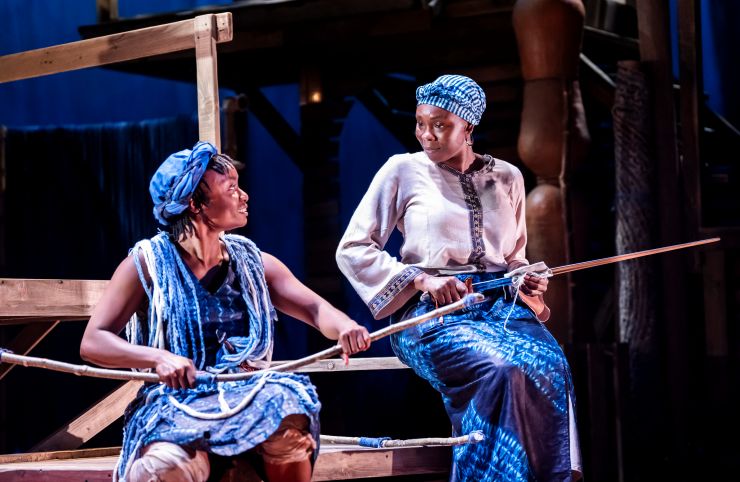
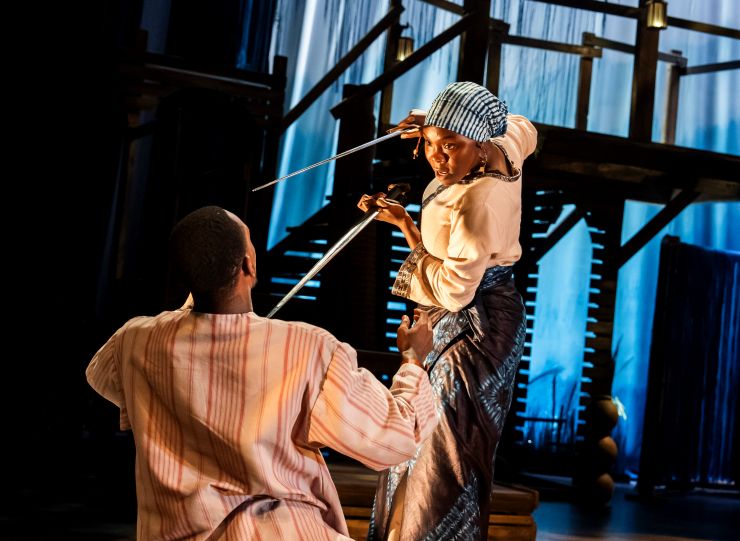
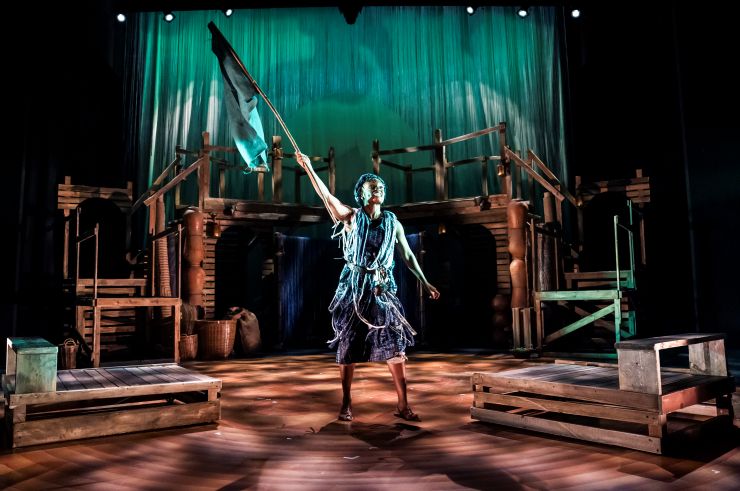
Zinari is a feminist, a bright star shining with confidence and humanity, brilliantly acted by Antonia Layiwola. She sets up a school for women in spite of strong opposition from the clerics, noblemen and merchants because she believes learning is the only real path to freedom and gradually emancipates her slaves. Zinari is a compassionate, highly intelligent business woman far ahead of her time who learns to fight with a sword from Yusef (Will Atiomo) for self-protection. Islam underpins her philosophy and she dislikes the way men have interpreted Sharia Law to exclude and disempower women. She is a beacon of hope for womankind in Once Upon a Time in Sokoto.
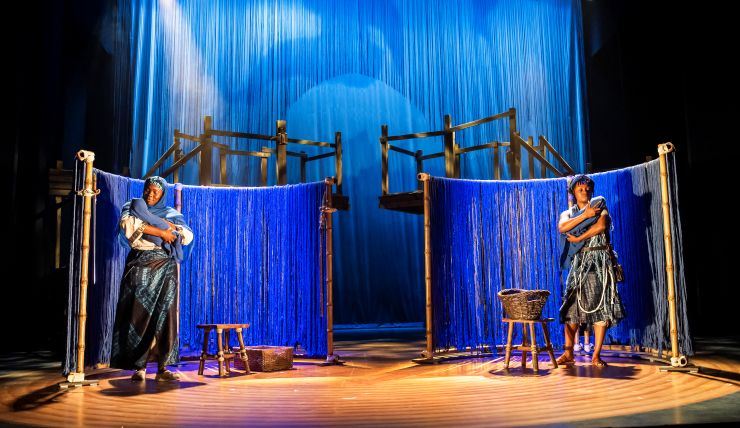
Hadiru is selected by Zinari’s father to protect her and he becomes her right-hand man. However, as he tours Africa and the Middle East to buy and sell slaves and Indigo, he hears all the insidious rumours about Zinari and increasingly fears for her life in Sokoto without him by her side. He lacks Zinari’s backbone and wisdom and ultimately betrays her several times.
Nafisa is born as a slave in Sokoto and makes her way to Palestine. She has lived her entire life in the shadow of the loss of her mother, a High Priestess. Nafisa becomes a beggar and story teller skilled in the Spoken Word. She is bristling with anger and carries a knife in pursuit of revenge. She also learns to fight. Her life is ‘an act of rebellion’ and a story of redemption.
Direction, by Roy Alexander Weise MBE, is excellent ensuring pace and passion to keep the audience spellbound as well as attending to every detail of the play. It’s musical composer is Femi Temowo and at Brighton Dome choreography is incomplete without movement direction provided by Coral Messam.
Once Upon a Time in Sokoto was written by Inua Ellams who has commissioned poems for the Tate Modern and the screen plays for the BBC. He also invented the Midnight Run in London. In my experience, writers from the Global South bring an authenticity to their art that far surpasses their White counterparts.
This play reminds me of my favourite film: ‘A United Kingdom,’ another romance about the emerging independence of Botswana from Bechuanaland.
It’s an outstanding and breath-taking achievement in every aspect: part romance, part thriller suffused with politics about Sokoto and Kanu, as well as Islam, marriage, colonialism and the birth of Nigeria. Don’t miss Once Upon a Time in Sokoto!
Brighton Dome Corn Exchange, Church St, Brighton
Tue 17, Wed 18*, Fri 20* Nov, 7.30pm, Sat 21 Nov, 2pm & 7.30pm
Thu 19 Nov, 6pm + post show talk
Photo credits: Tristram Kenton
