
Simon Stephens adaptation of this beautiful story is just as groundbreaking in theatrical production terms as Mark Haddon’s original 2003 best seller. The book, and subsequently the play, touched a nerve across the world: here was a young neurodivergent teenager as the main character in their own story, where we see everything through his eyes. The National Theatre production was phenomenal, and there have been many brilliant versions since from high tech to no tech, where in every production, the acting and the belief the actors in have in their characters and the story they are telling transport the audience to entertain and to move them, and to give them the gift of insight into something they may not have known about before.
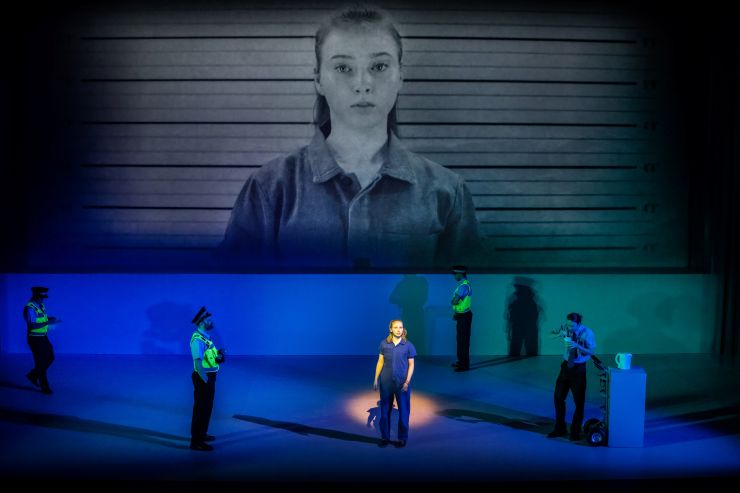
However, there are significant issues with this particular production, which seems aimed at school groups, with the feel of a ‘Theatre in Education’ production. Just because the play is set in a school hall doesn’t mean the audience should have to feel as if they are watching the actual school production. There are parts that use moving tech which seems to have everything thrown at it, and then other parts where the stage is virtually bare with big squishy cushions and not anything else: the juxtaposition between them is jarring, as is some parts that are heavily and loudly underscored interfering with hearing the dialogue in places. Plastic vertical strip curtains on each side give it a medical feel, and being transparent, means we can see everything being moved and things being made ready to come on, as well as actors waiting: taking us out of the story being told on the stage.
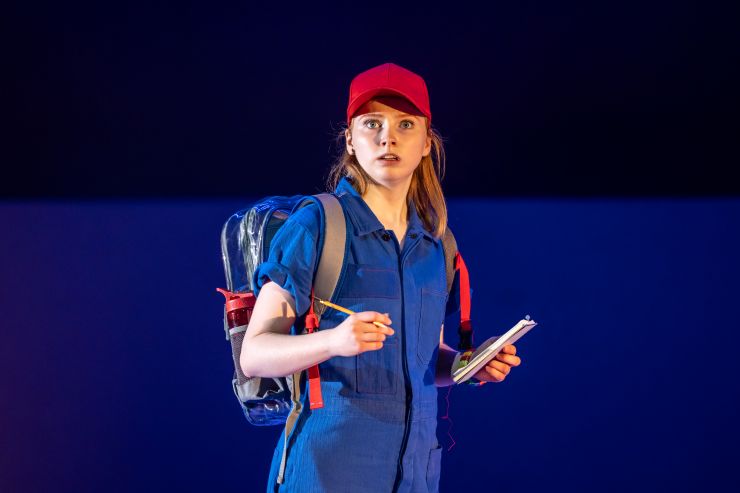
The write up in the programme about the choice to recast the original Christopher as Chris, a young teenage girl, is very interesting and informative, highlighting the differences between the presentation of autism in girls and boys, which is generally very different. It’s admirable that the aim was to present the character as female in an under-represented area, however if adjustments have been made in the presentation from male to female this doesn’t quite land. Interestingly neither the play nor the novel ever mentions the word autism but presents certain characteristics instead, rather than rushing to diagnose, which is an important distinction. However, this particular portrayal is very outward and loud and rather stereotypical, rather than nuanced or subtle, which it might have benefitted from at times.
Joe McFadden is a lovely Ed Boone in this version, multi-layered and sympathetic. We don’t like what he’s done but we can understand him, due to the warmth and empathy he has. His scene with Chris when he tells the truth is lovely, it’s a shame it’s on such a wide open stage lacking in intimacy whereas creating something smaller would have helped us understand things from Chris’ small world view. Siobhan the teacher is usually the warmest character giving heart to the play but this doesn’t land as well in this production, especially as there was significant over projection from the actor on top of her mic which seemed to detract from performance.
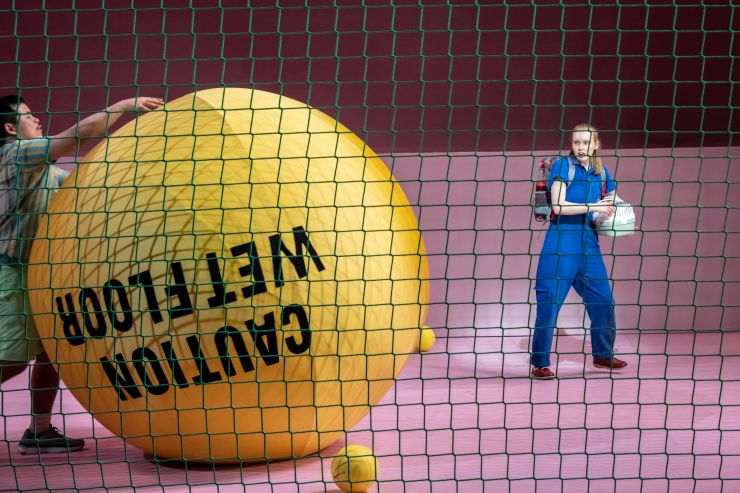
One of the most uncomfortable issues with this production is the attempt to turn many parts of it into comedy. One scene where Chris is on the verge of having a meltdown due to experiencing chaos in the train station was played as funny at first so some audience members laughed, while Chris becomes more and more distressed, which is deeply uncomfortable. The issue of Chris becoming seriously overstimulated and overwhelmed and struggling with emotional disregulation during the journey with advertising slogans and titles being shouted at her can be a very powerful moment and it started well, but the massive drops of yellow balls which presumably are meant to represent this cause audience laughter compounded by the balls having to be gathered up (taking quite a bit of time) and put in bins. This can be a profound moment where we feel such empathy for Chris’ distress: if the design of the scene was the aim, this didn’t land.
There are other strange choices such as placing of lots of gnomes around the stage for unexplained reasons, actors doing forward roles and cartwheels, and the worst part, the portrayal of someone having a bowel movement in a train toilet and being constipated, for what reason it is not made clear. The book is wonderful. The play is fantastic, and is recommended. However, this version, sadly is not.
Theatre Royal Brighton, 30 September 2026
The Curious Incident of the Dog in the Night-Time runs until 3 October 2026
Photos credit: Johan Persson
