
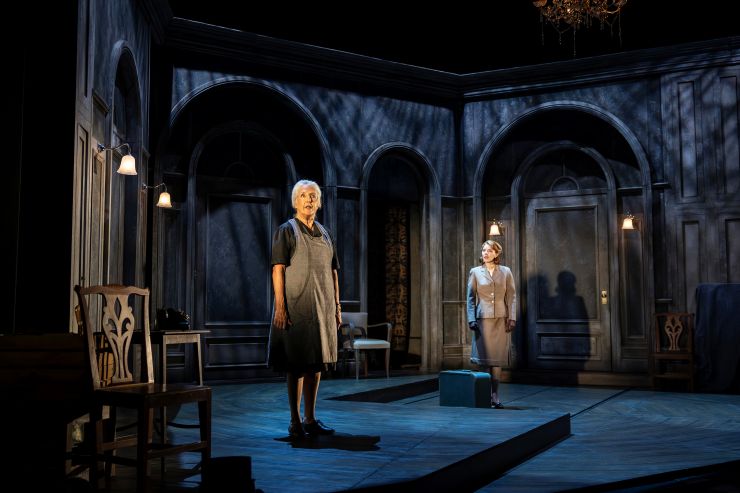
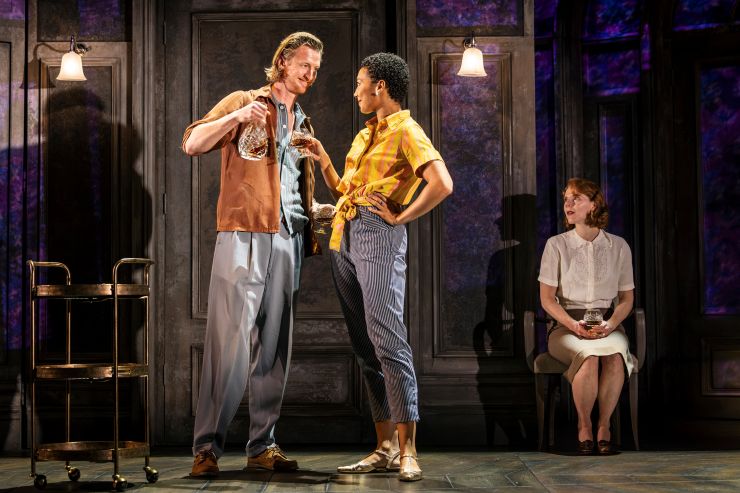
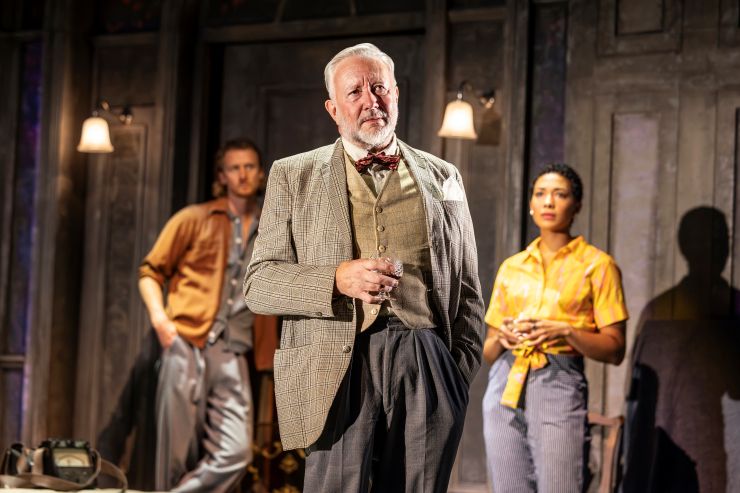
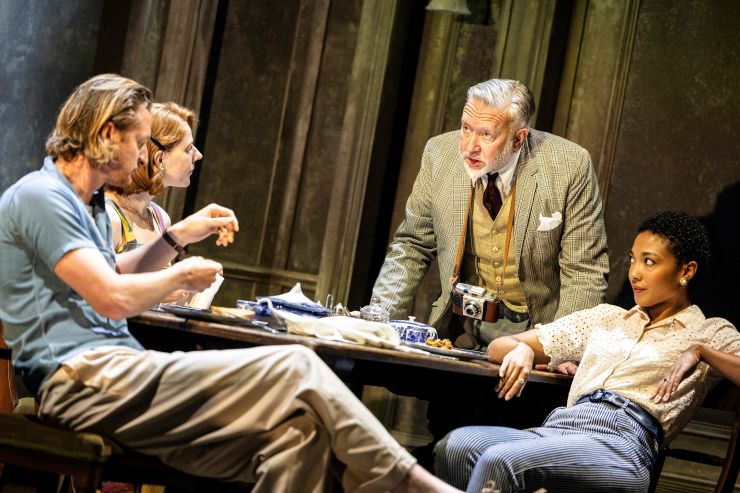
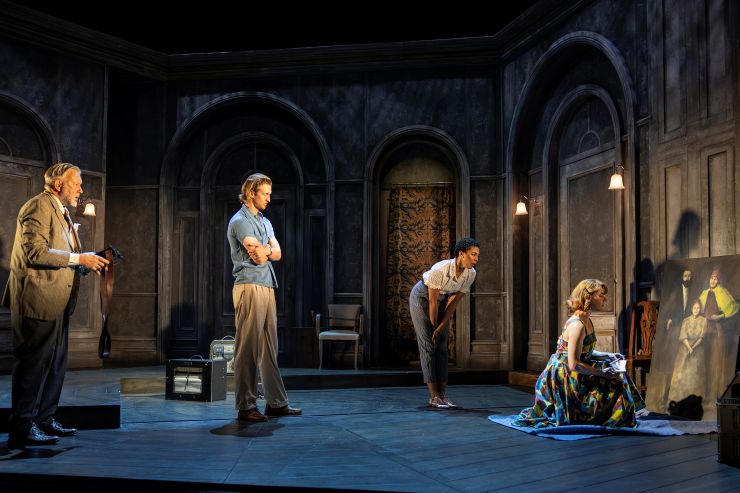
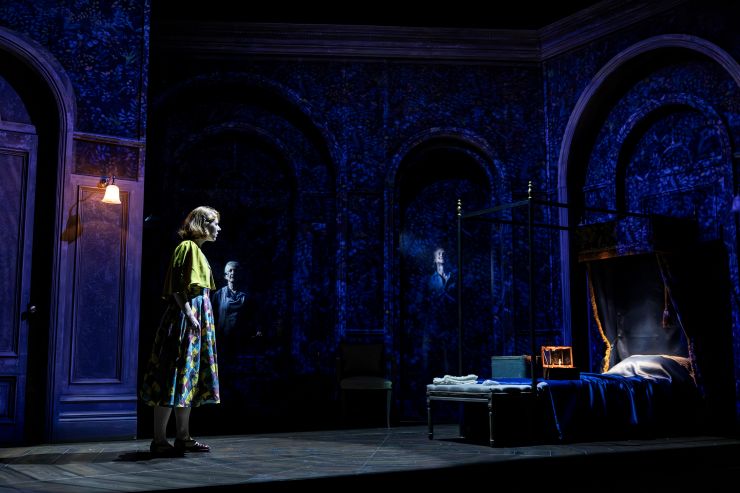
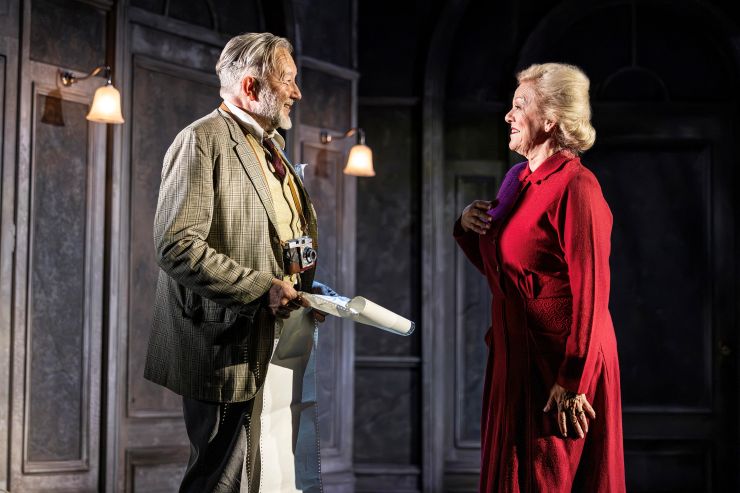
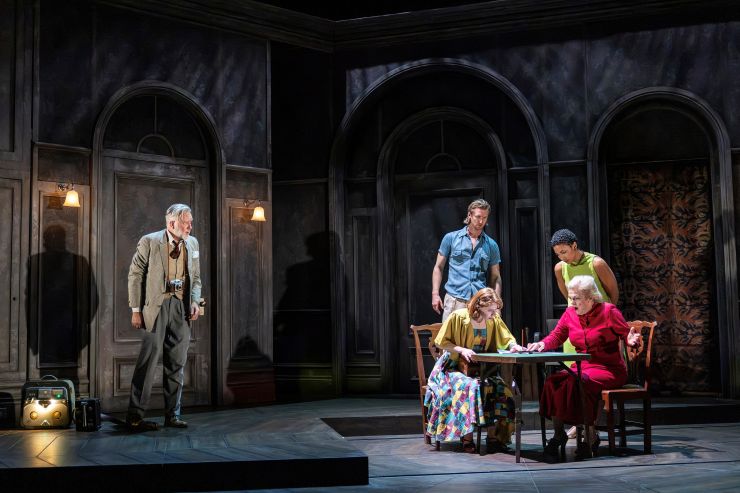
The house “has a cold heart” says Eleanor Vance, as they all gather in the centre of the house, hoping to capture ghostly goings on with at the time new electronic equipment. It certainly does, we feel the dread as almost palpable with the plentiful jump scares and some mounting moments of tension. We wonder what’s behind the lamps suddenly bursting, the flickering lights, the sudden blackouts and bangs and bumps behind doors: what is disturbing the house so? Is it actually as safe as Dr and Mrs Montague think it is to be there? Can ghosts actually harm the living, and what does the house want?
We have been intrigued by things we can’t explain since the human race began to communicate, and ascribing other worldly explanations to things that happen to us is sometimes done when logical reasons have been exhausted, although sometimes before. It’s this that Shirley Jackson’s magnificent original novel taps into, and it’s achieved classic status as one of the best ghost stories of all time. Of course being a massive text means that there are many and various adaptations, and many people will be more familiar with the Netflix series which bares little resemblance to the original story, than they would be with the 1959 novel, or indeed with the first adaptation to film of 1963 which was very close to the book (the 1999 film adaptation is probably best avoided).
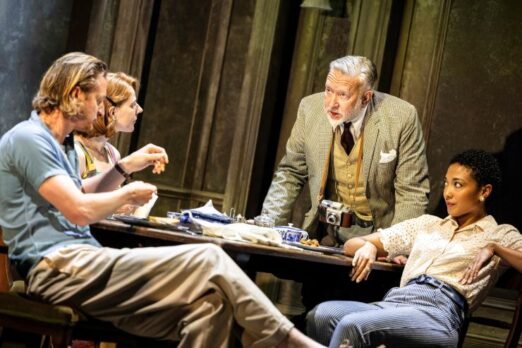
This latest adaptation has love for the original and takes the characters from the book, and they appear exactly as written, with the exception of Theo’s interest in Luke, or his interest in Eleanor. It very much feels like the 1950s which is a lovely touch, and the lines in Dr Montague’s introduction to the house and the lines in Mrs Montague’s last words before leaving are glorious little excerpts from the novel itself, with some of its most famous passages repeated. However, it also adds its own spin on the classic tale and leaves much of what was so scary about the story completely out of this adaptation, which leaves us wondering why such mysterious choices have been made. There is a malevolent presence throughout the original story that grows and develops into a terrifying climax, and although the denouement is shocking, it’s not as terrifying as it could have been, even though there are jump scares aplenty.
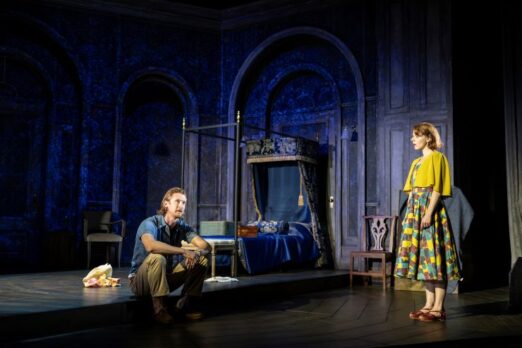
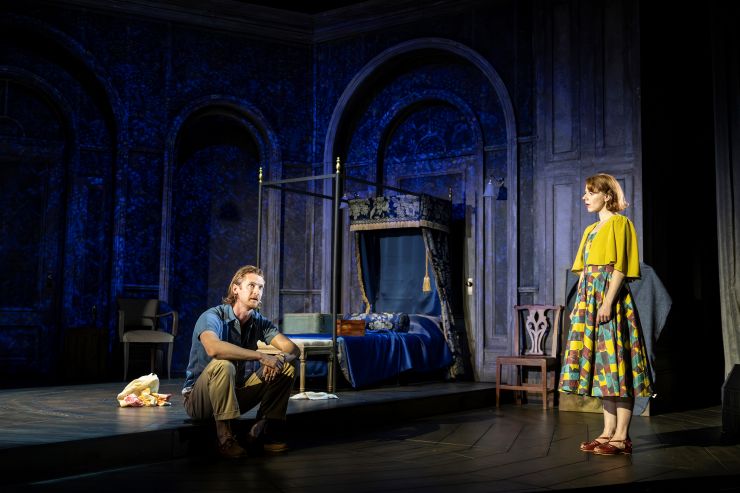
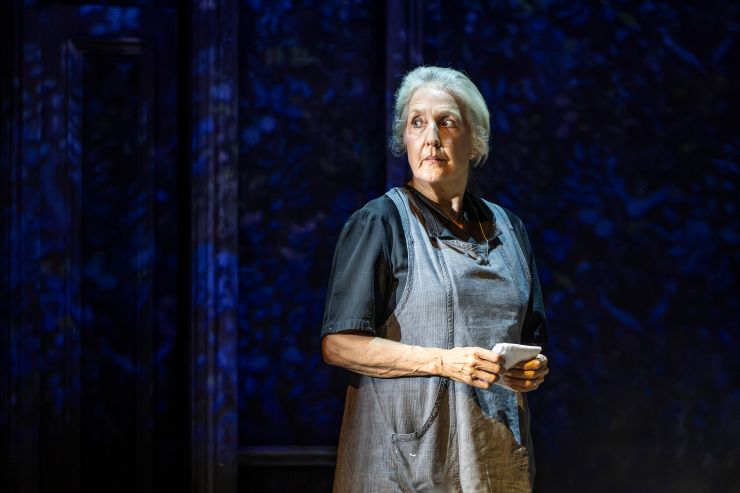
Clancy Ryan shines as Eleanor, peeling back the layers of her very fractured psyche as the play goes on. She is the pivot point for all of the others: a strong ensemble cast with their characteristics drawn from the novel, and her nervous energy drives the piece. We become invested in her and want peace for her even when we don’t really understand what’s going on until it’s too late. She is both fragile and a little scary at the same time due to her unpredictability, with her vulnerability showing despite her guardedness. It’s a joy to see the others leap from the page completely, even though Luke is drawn here a little more sleezy than the original. It’s slightly stylised acting, as we need to imagine ourselves in the expectations of 1950s behaviour to believe it, but with that in mind, Jasper Britton as Dr. Montague, Jemma Churchill as Mrs Montague, Sian Howard as Mrs Dudley, Sophie Lenglinger as Theo and Robin Morrissey as Luke are all well placed and believable.
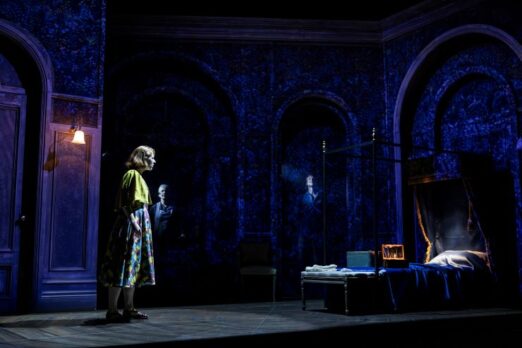
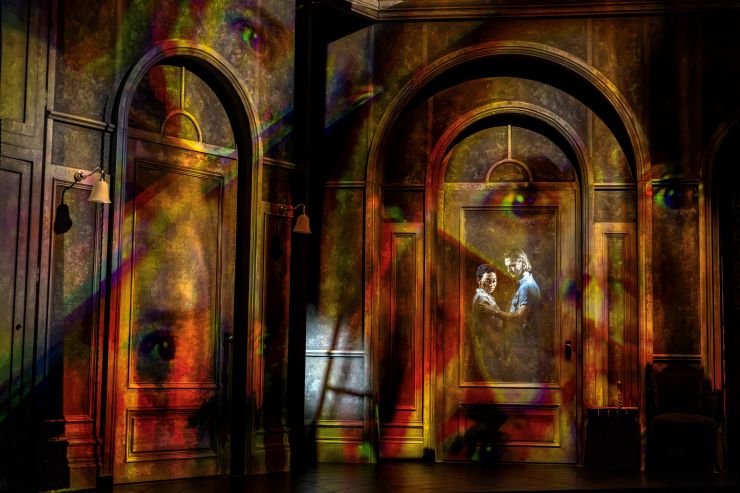
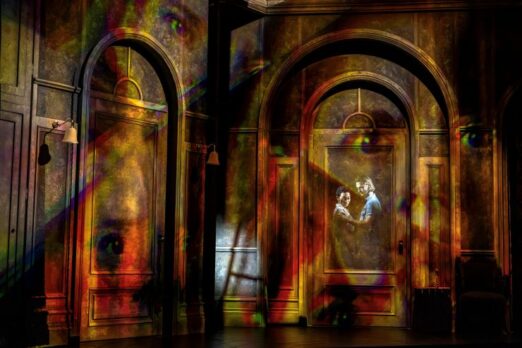
The set looks wonderful and the ever-changing rooms altered with lighting and projections work well, although they go on for a very long time, which could have been given to extra plot, given what has been left out. There is a sense of grinding gears changing the rooms of the house which is a nice touch but more could have been made of it, plus less time devoted to just watching projections rather than story. The ending of the first Act and then there being hardly mention of it in the beginning of the second Act leaves you almost gaslighting yourself with what actually happened: the story is linear but something feels left out here. Some effects are good but some slightly out of sync which leaves us not believing the magic: something no doubt that will get smoothed out during the run. Although when you can see straight into the wings with people standing watching, it does rather take you out of the moment.
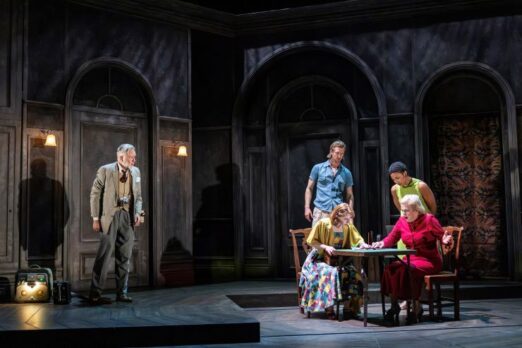
There is a huge focus on tech and shock tactics and effects, prioritising jumps scares as opposed to the story which is actually more about creeping dread: hard to do on stage, but not impossible. The question is, are we producing theatre that just uses masses of tech and jumps scares because that’s what people want, or because we think that’s what people want? Maybe theatre goers would leave with a more impactful experience if we trusted them to follow the journey without all the bells and whistles. Nevertheless, audiences will no doubt enjoy this experience because it delivers on jump scares, with interesting effects, and with solid performances.
Theatre Royal Brighton, 20 Oct 2026
The Haunting Of Hill House runs until 24 Oct 2026
Photos credit: Pamela Raith
