
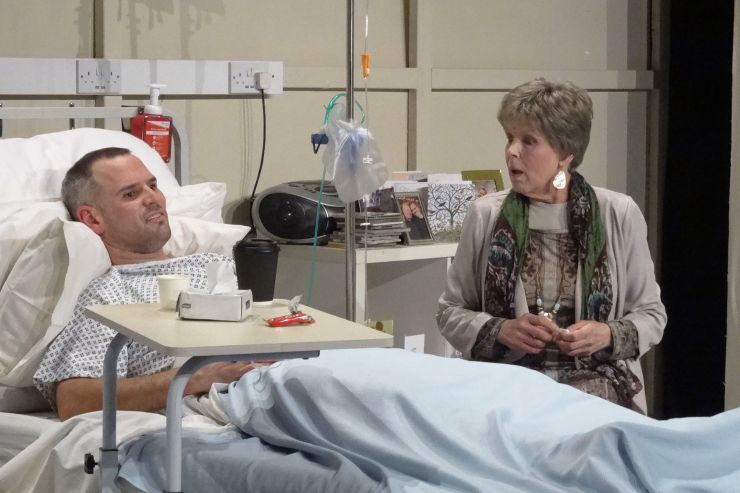
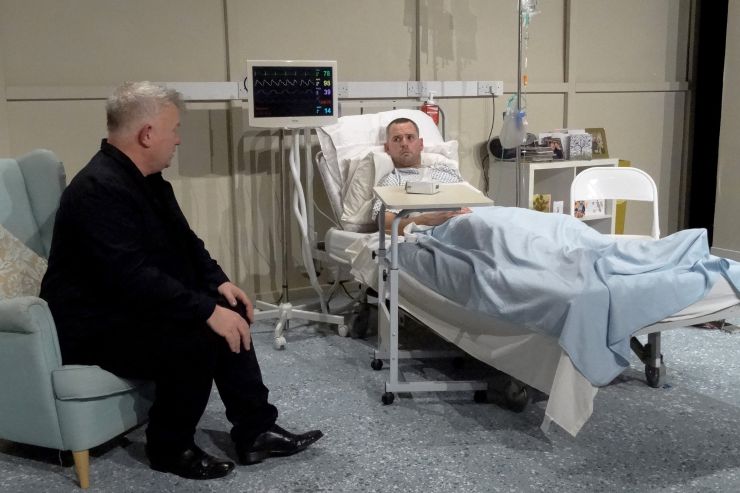
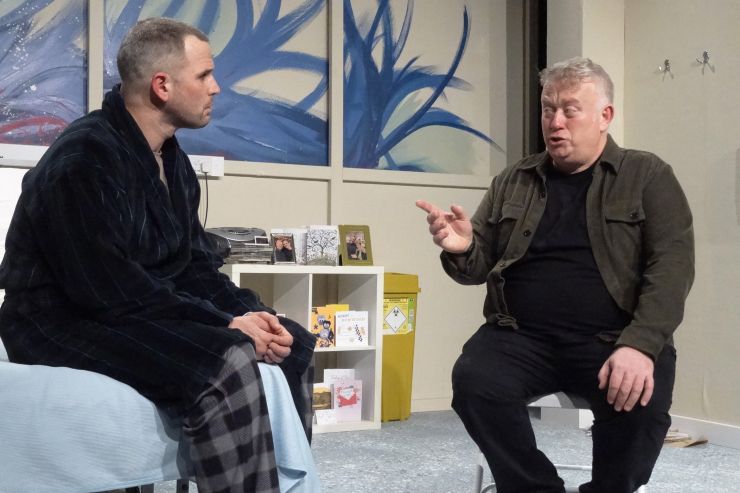
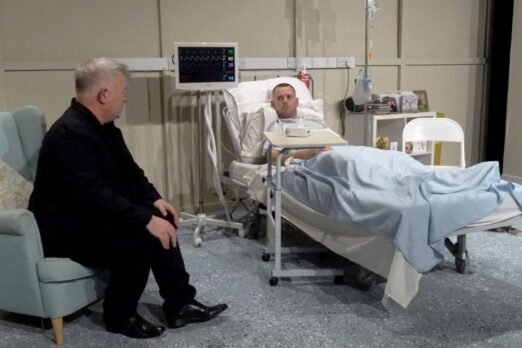
Can you imagine losing the last 11 years of your life? That is just one of the questions Peter Quilter’s intensely thought-provoking play asks us in this fascinating three person drama. The story centres around Michael who in a stunningly realised hospital room complete with visible monitor and drip. He lies in bed completely still, with oxygen mask, in a three week coma. The two orbiting and colliding around him are his fiercely matriarchal mother Carol and his partner of the past 10 years: Paul. They have very different and opposing views of what exactly is best for Michael; although the love they both have for the man in the bed is clear in the subtext of everything they say.
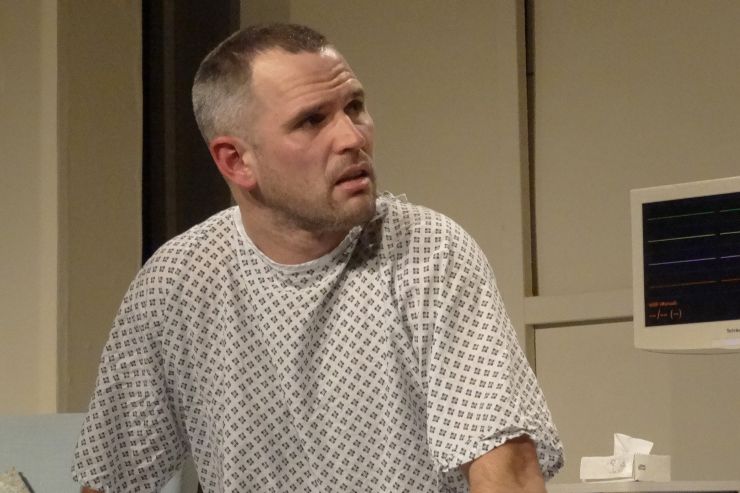
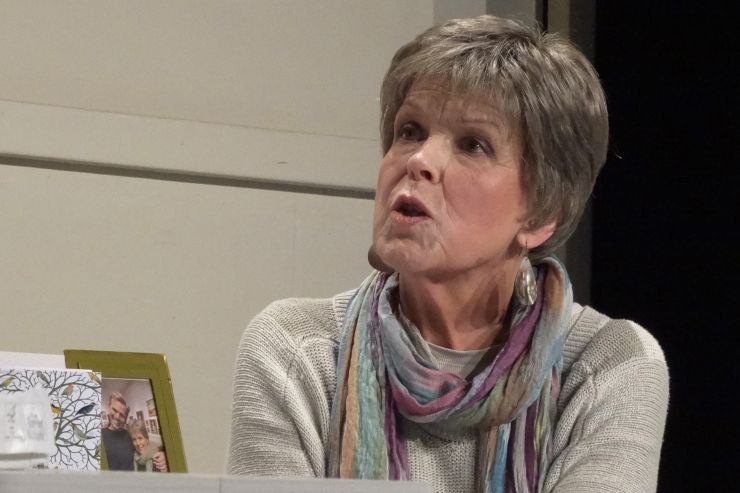
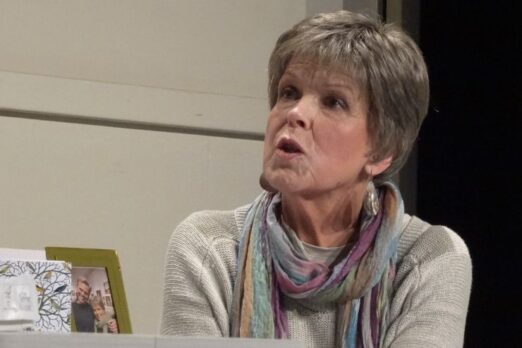
Not only is this a compelling and engrossing play, it features some captivating performances by the three actors. Katie Brownings is incredible as the outwardly strong and often dislikable mum, playing her as a grounded and real person with utter contempt for Paul in some scenes. Yet she plays her with a fascinating layering, brittleness and hidden vulnerability that she garners sympathy even when she’s trying to control her son’s life. She firmly believes that she should be the most important person in Paul’s life, and this power play fuels her. Rich Watkins is equally strong as Michael, with some deliciously delivered cheeky banter, matching his powerful mother in scenes where he clearly shows that although he doesn’t say it outright, he will not be controlled. Their mother and son relationship is so believable, exemplified by the easy way they share a matchmaker style chocolate which is one of the many gorgeous moments.
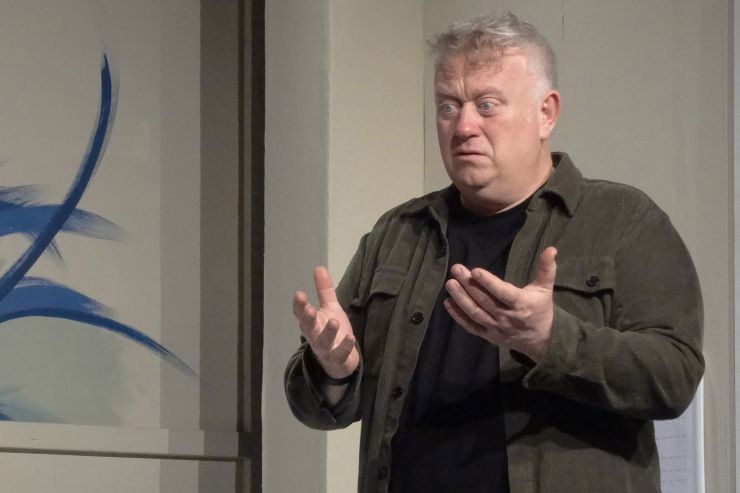
Mitch Jenkins completes the three, with an intriguingly understated performance of partner Paul which is such an unusual choice. The mutual loathing between him and Carol is played as a seething undertone that quietly bubbles like lava underneath their interactions that occasionally bursts out mainly from Carol: it beautifully wrongfoots us, as we expect to see a controlling partner, but we see someone who loves and cares deeply for Michael, prepared to make the ultimate sacrifice when nothing of their life together is remembered; criticising himself for helping to change and mute Michael’s creativity. His red rimmed tear filled eyes in one scene where he berates himself is both devastating and captivating.
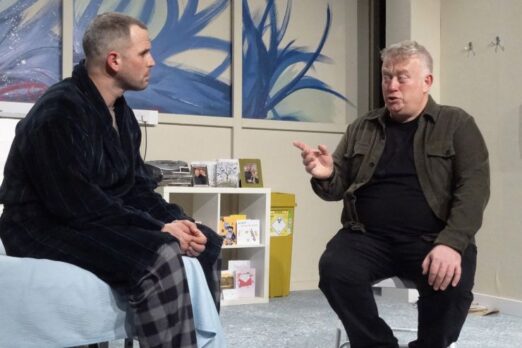
This is a play which challenges us all, but like the pieces of art which Michael creates on the walls of his hospital room, each of us will see different things mirrored back. If everyone around you suddenly said it was 11 years later than you thought, wouldn’t you initially want to believe your own mind, and view them as having some ulterior gaslighting motive? Rich Watkins’ reactions, reading the carefully curated stack of newspapers so he can catch up on the world: Brexit, Trump, Covid, Lockdown – are heartbreaking, and we feel for him, as we think back to all that’s changed since 2015. More than that, his obvious want to remember and connect with the man who says he’s been his partner for the past 10 years is so emotional, as is Mitch Jenkins responses as Paul, trying to be respectful yet desperate for his life: their life together, to have mattered. The push and pull between them is like watching a little energy dance played out on the stage.
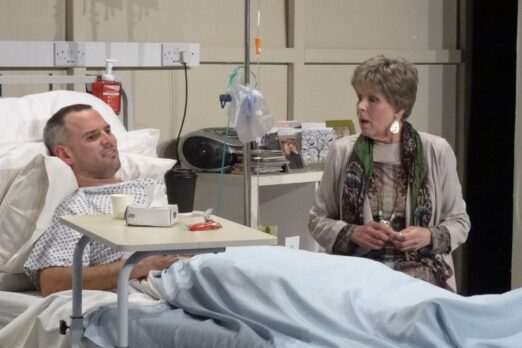
After all, what is memory? As Paul says, it’s not truth. But our perception of our lives are no less important, even if they are just perceptions. It’s of course possible to get wildly philosophical about the themes in this play: what defines our characters, our personalities: is it the memories we make, the memories we have of who we are? But if we go too far down that rabbit hole we might miss that there are times in this play which are hilariously funny, leaving us laughing out loud at life, reminding us not to take everything so seriously. The fact that the relationship is two men lends to the dynamics in the play but mercifully doesn’t fall into the trap of being about homophobia: as Carol says to Paul, she just doesn’t like him. Yet ultimately, this play leaves us with hope and inspiration: that it’s never too late to change your life, to remember parts of yourself you might have forgotten, and to rewrite your own story.
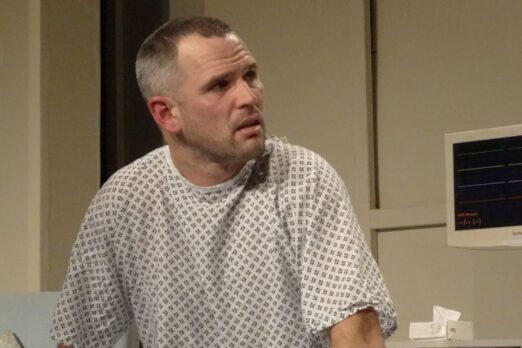
There are so many lovely touches in this production: the not quite blackouts between scenes and the tonal colours in the lights, a gorgeous moment of Michael in a cascade of post-it note memories, and Carol starting the play with her back to the audience: all stunning choices, examples of Charly Sommers’ sensitive and acutely perceptive direction. It also features an evocative and lovely soundtrack including Nick Drake, moving from ambient sound to coming from the radio on stage. All the details in this production have been given such wonderful attention and room to breathe. Seen on opening night, some of the transitions were a little hurried, but no doubt this will change as the run progresses: if they do and they become more part of the story, this production would be absolutely perfect.
New Venture Theatre, 16 January 2026
4000 Days runs until Sat 24 January 2026
Photos credit: Strat Mastoris
