
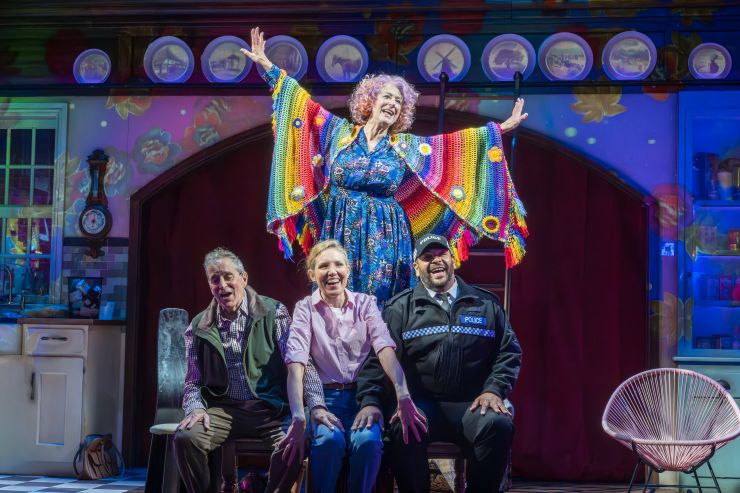
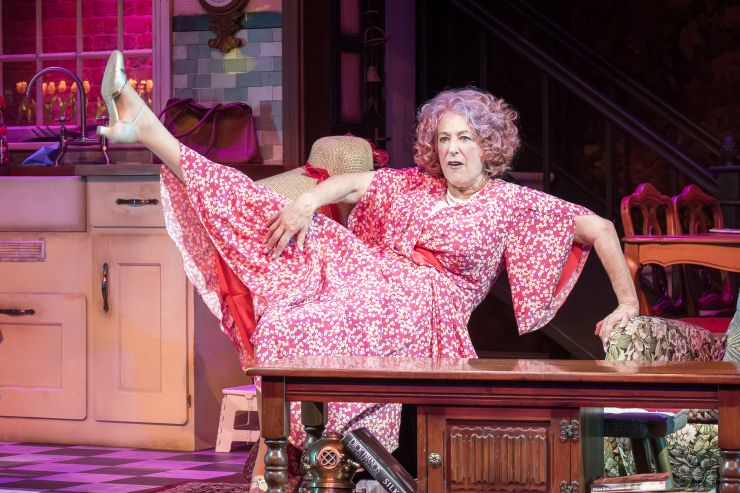


Allegra is irrepressible. She is vivacious. She is unquenchably lively. And who better to play her than national treasure Dame Maureen Lipman. After all, she knows someone with an -ology.

This is a play which disarms at the start, you may think it’s just fluff – and some may indeed take it that way. However, when we move into act two, something deeper starts happening, there is such a subtle bubbling under of deeper meaning to Peter Quilter’s clever play it takes you by surprise. Allegra we learn is not terribly good at the day to day living essentials, like remembering to buy food, remembering to get up in the morning, or tidy or clean anything in the house. Her brother Ronen, her opposite grey to her vivacious magenta, is rightly worried about those things, but also how she purports herself in public.
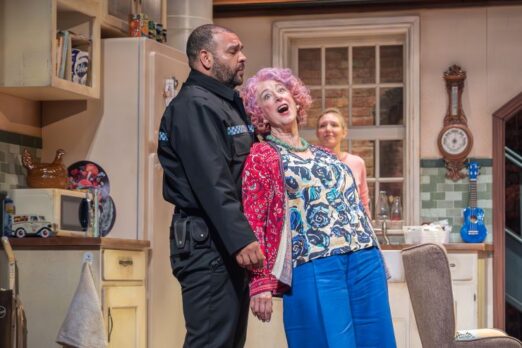
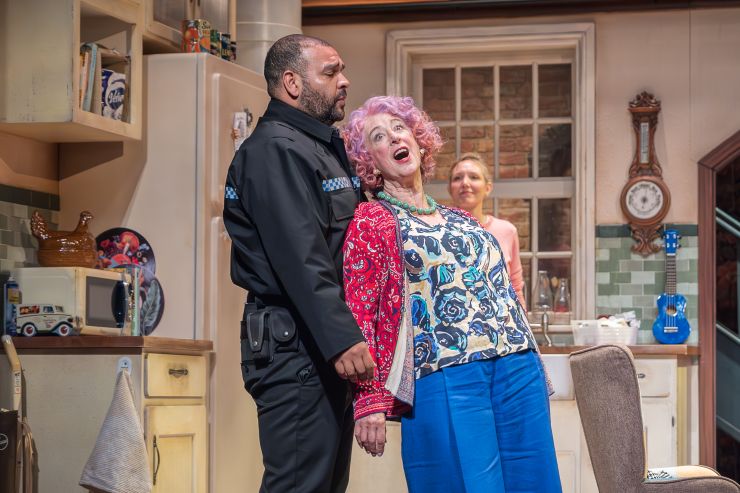
It seems people have complained, at length, about her repeatedly bursting into song while at the hairdressers, care home, pastry shop, library – you name it, she’s sung there. She talks of not knowing whether the music is in her head, whether she’s actually singing with the backing of a full orchestra, or whether she’s just burst into song: she can’t tell the difference. The Police, and Ronen, tell her she needs to stop, and she needs to take her medication. Allegra says she’s bringing joy and kindness to people and the Police say people will ask for that if they need it.

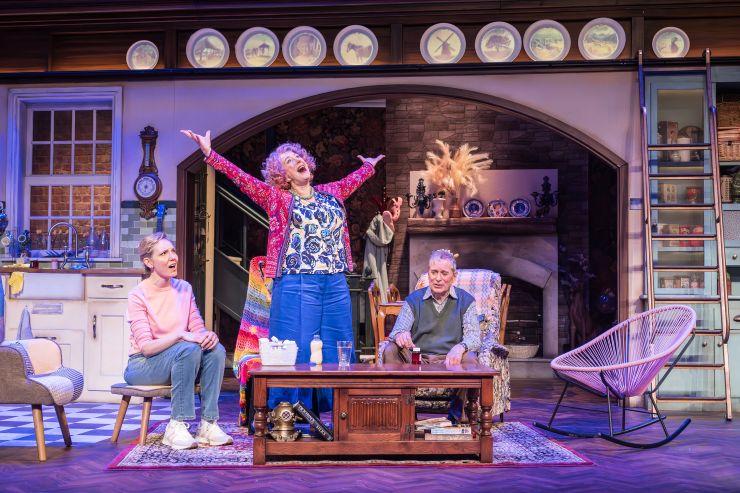
Maureen Lipman’s beautiful natural acting is the perfect portrayal of the character who is a little extra. The eccentricity is completely believable and never overdone, and the words are spoken so authentically it’s as if she’s literally just thought of them. She becomes Allegra with such integrity and truth it’s a total joy to watch her: her presence is such a draw it’s impossible not to watch her when she’s on the stage, which is almost the whole time. The segues into the musical interludes, whether they are in her imagination or reality, which is clear for the audience if not to Allegra, are beautifully done: with lighting and props and set additions that are hilarious. The profound dip at one point is devastating, seeing her so zombified and not able to hear the music any more, we feel utterly bereft for her.

Elizabeth Bower plays the Czech home help Anna that Ronen organises and has channelled the Eastern European demeanour brilliantly: the slight stiffness, the fish out of water feeling of being in a Country where you weren’t born. The travel from neutral support and kindness to Allegra’s fiercest supporter is natural and wonderful to watch. John Middleton is great as Ronen coming across as super anxious, and perhaps will settle to a more earthy version as the run progresses. Bailey Patrick comes across as angry most of the time as Officer Rogers, but the light and shade of this character will no doubt be found as the run progresses, helping this to land better.
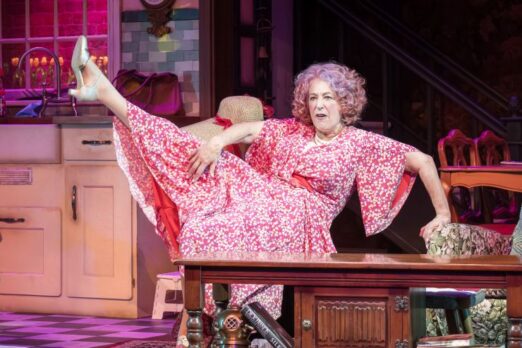
This is a gorgeous and unusual story, beautifully written with intelligence, understanding and wit. The discussion Allegra and Ronen have about taking medication is so perceptive and poignant it’s positively cutting: in the right way. Why are people so bothered about her singing? Because, says Ronen, “unhappiness is the new normal – the default resting state”. Allegra’s response is both perfectly written and perfectly pitched: “So why am I the one taking the tablets?!” It’s a question which stops us in our tracks: the societal need to repress anything that is a little extra, a little odd, a little off. To behave in the confines of a box. To supress and be grey normal, don’t make waves, don’t annoy people intent on being miserable by singing and brightening their day. Allegra’s journey is joyful, heartbreaking, vindicating and ultimately uplifting: a play to come out of with a spring in your step, being grateful and hopeful that people like Allegra actually exist.
Theatre Royal Brighton, 14 May 2026
Allegra runs until 16 May 2026
Photos credit: Marc Brenner
