
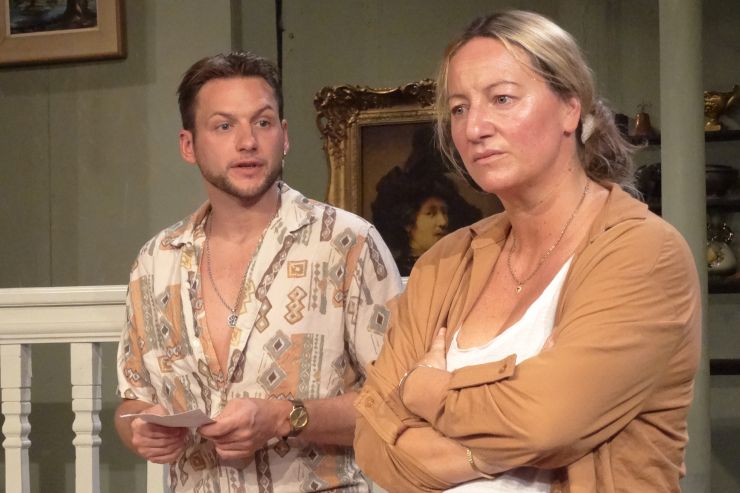
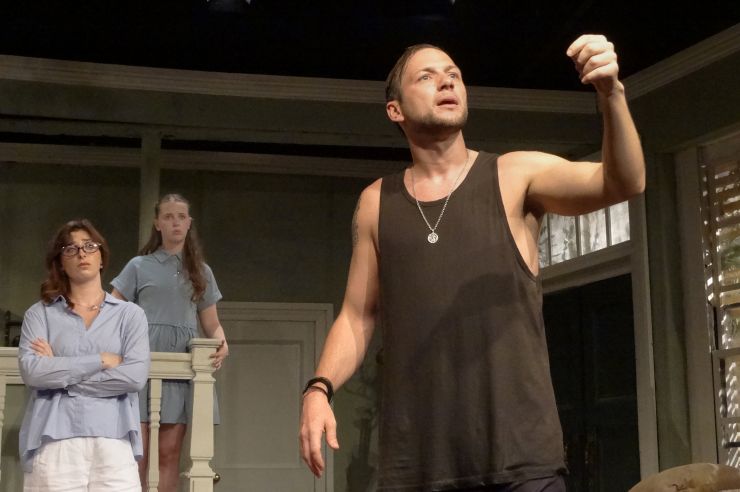
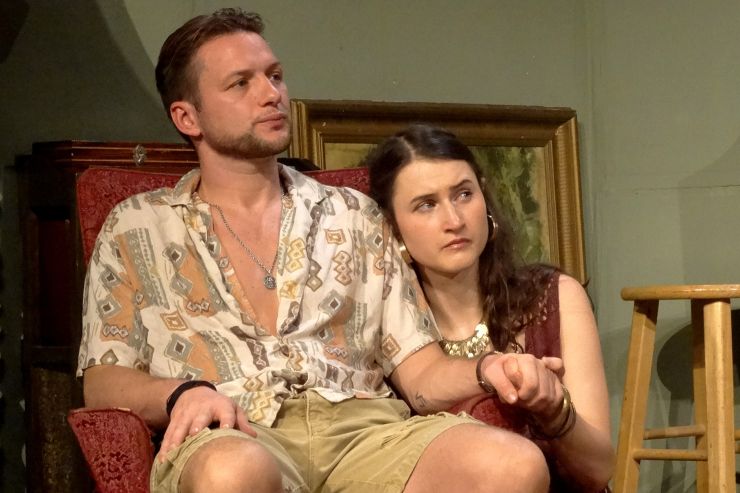
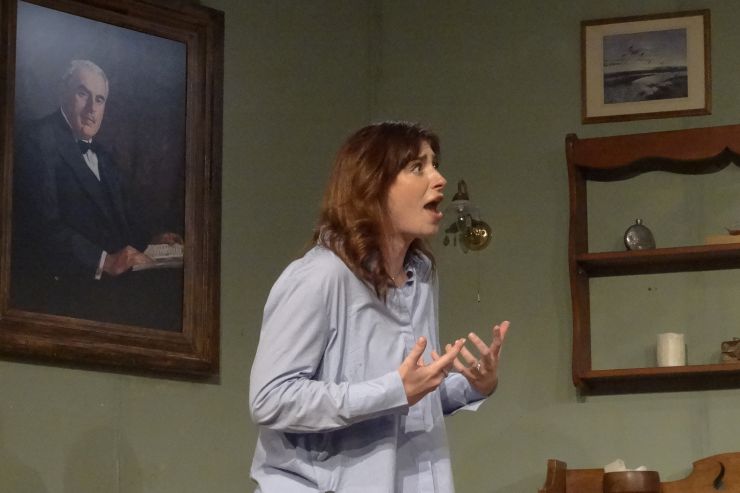
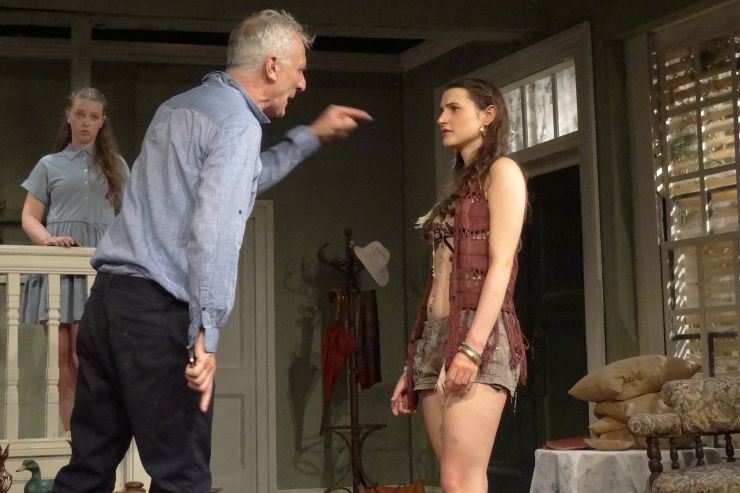
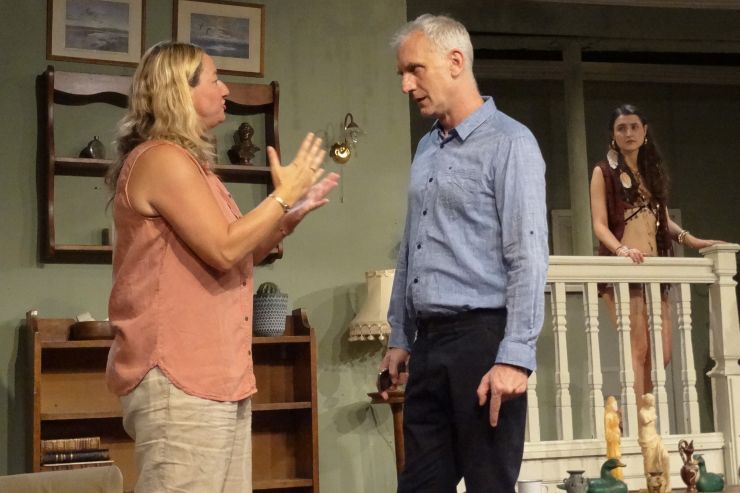
After only a few minutes it’s immediately clear how this has become a Tony Award Winner and Branden Jacobs-Jenkins is a Pulitzer Prize winning playwright. This intense and riveting play contains such acutely observed human behaviour, particularly how families operate: the deeply held hurts and resentments and how they bubble and surface. It’s so real it feels as if you are looking through someone’s living room window to a family scene. Sentences overlap, misunderstandings and long held grudges simmer and explode. It’s a fascinating study of grown siblings and their families: a legacy of duty, rebellion, care, and never truly having had a conversation about how they really feel before. It’s incredibly gripping, beautifully realised by Director Claire Lewis.
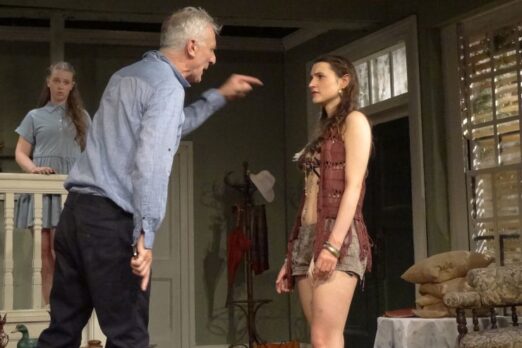
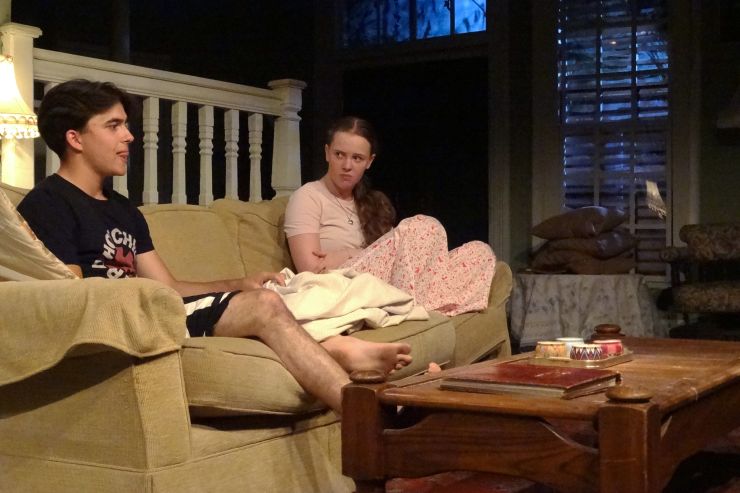
None of which would mean anything if the actors weren’t astonishing – and astonishing they are. All the characters are fully realised and rounded, real breathing life-filled humans; beautifully multi-faceted, with nobody as completely good or bad. As the play moves we move with it, changing our allegiances and sympathies with each new piece of information and revelation. The three siblings have such history it’s almost palpable: their families have varying degrees of knowledge and bring their own complexity to fray, especially the children. This is natural acting at its absolute best, and a privilege to watch.
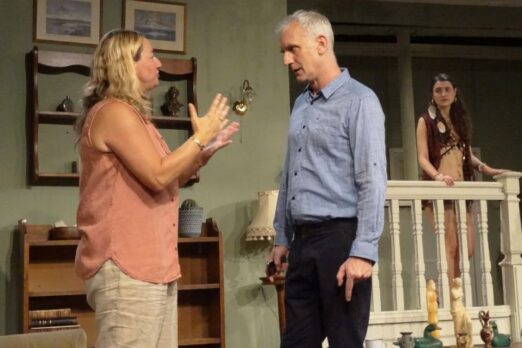
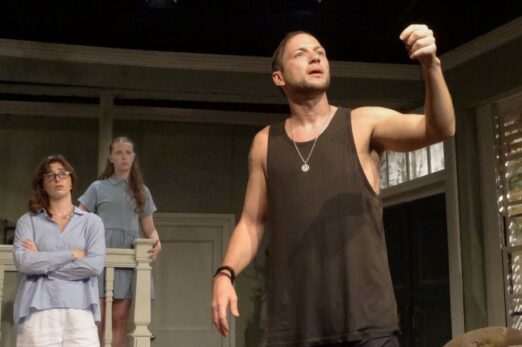
Sophie Dearlove is a revelation as Toni: fierce, sometimes provocative, and occasionally unlikeable. The mother figure pushed to the end of her tether and making bad choices in her explosions. She is unflinching in this role and a compelling joy to watch. Greg Donaldson and Oliver Canavan as the brothers Bo and Franz (or Frank) form a very unstable sibling triangle packed full of history that boils over in the heat of the exchanges and gives us colour on their lives: Bo as the stiff upper American lip, restrained with everything churning inside and still letting us glimpse it through deliciously subtle tones, and Franz is so full of contradictions, escaping or denying his past, asking for forgiveness – or is he. All of them seethe with repressed anger which spills out in sometimes shocking moments and sometimes hilarious ones that take you by such surprise that there are guffaw ripples through the audience.
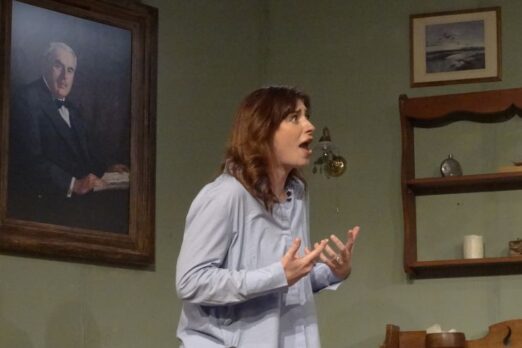
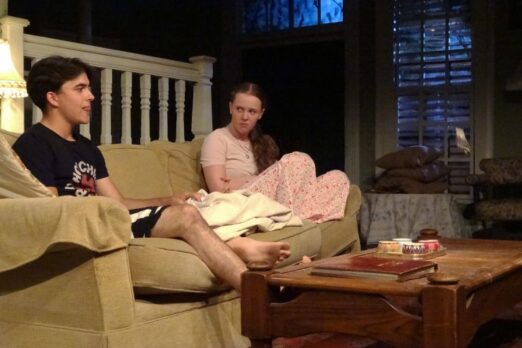
This is a play where all the actors are incredible, and Amelia Leigh gives a standout performance as Bo’s wife Rachael. Watching her and Sophie Dearlove is watching an acting masterclass, characters with such contrary backgrounds and life views, both at times sympathetic one minute and unlikeable the next. Their conflicts are so breath-takingly real it’s fascinating. The two teens in the cast give gripping performances, truly ones to watch for the future: Maria Sturt gives a deeply uncomfortable performance as Cassidy which is perhaps the most haunting character: full of mood and longing for adulthood, with a troubling reaction to a particular find. Moses Azadeh’s Rhys is unapologetic, grounded and authentic: both give such compellingly natural performances. Each actor could be singled out to be lauded, which is so rare, and such a treat.
This is a family drama, but with a difference. Something deeper is going on and it’s not just about very uncomfortable revelations where evidence of ancestral secrets pile up to the point where you’d think they can’t possibly ignore it – and yet their reaction is one of excuses and disbelief, wanting more and more proof. There is a fascinating exposition of the things we do when despite overwhelming evidence we refuse to believe something, because it changes our world view of someone so close to us that it threatens our own identity. This dark side of human nature is very rarely explored in plays or films as it’s so hard to capture. Which is what makes this play worthy of every accolade as well as serious dissertation writing study. It’s an incredibly profound statement of how we refuse to change deeply held beliefs: resulting in an uncomfortably poignant play.
The lighting is gorgeous, especially the shadows of the plants across the windows, and the light showing different times of day coming through slatted blinds. Such lovely attention to detail, present in every scene. However, there are some deeply uncomfortable scenes and references, and a photo album which has such presence almost becomes an extra character. The youngest son Ainsley entering the beautifully crafted family argument having discovered something changes our response from laughter to absolute horror in a heartbeat. The most disturbing is perhaps the jars: among their recently departed father’s things, as they clear the house, and a throw away comment so easy to miss explains what they are to shocking effect.
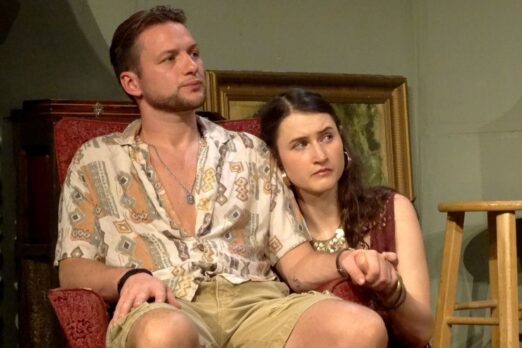
It also asks some difficult questions of us: how much do we know our family’s past? Or the views of people who have been close to us our whole lives? How much are we influenced, and carry on being influenced, by our closest people growing up? Perhaps some prejudices are so ingrained that we hardly notice them, as with Toni noticing Rhys’ slur and challenging him on it, but quickly letting it go. This is a play which will quite literally haunt: keeping us thinking about how legacies influence, and wondering what potential blind spots we have towards the people we love. And the ending – well, you’ll just have to see it. This is a stunning, superb production; a little slice of theatre perfection: a five star worthy production. Don’t miss it.
New Venture Theatre, 17 July 2026
Appropriate runs until 25 July 2026
Photos credit: Strat Mastoris
