
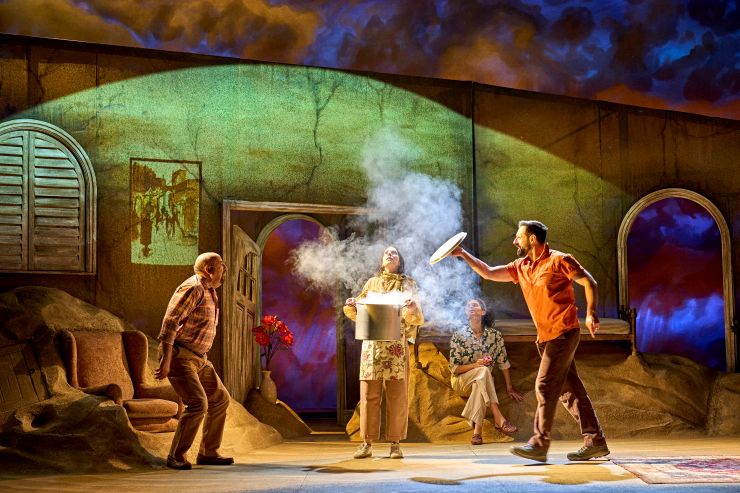
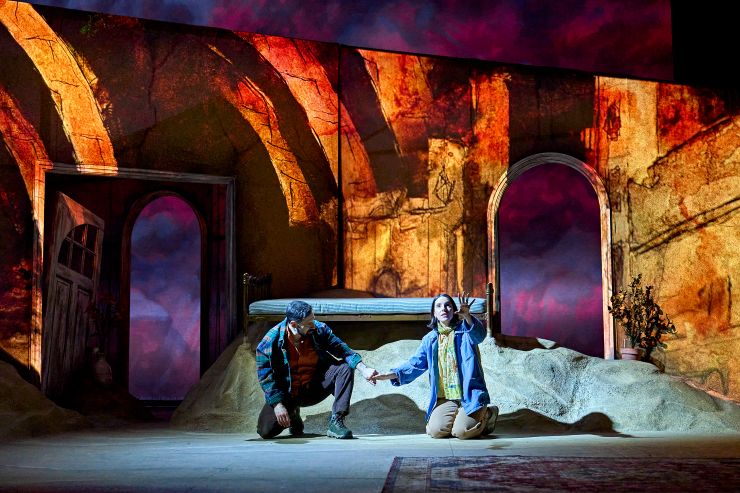
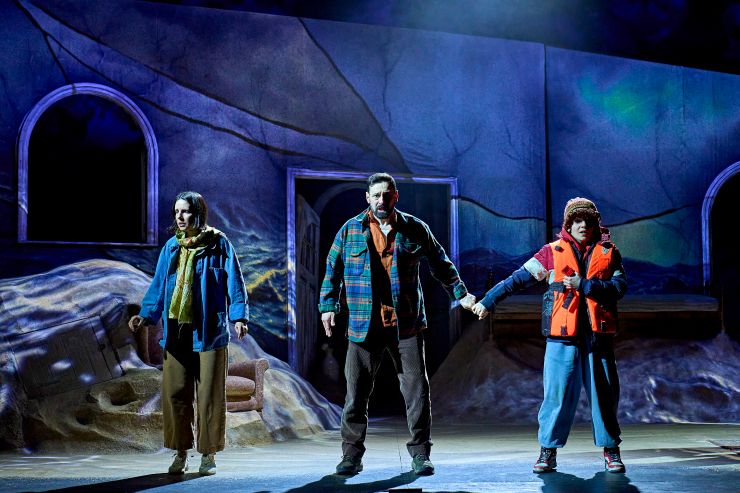
There’s always the thought when you see a stage adaptation of a novel of whether you need to have read the book in order to understand what you see on stage. This is a rare exception, where the story works as a cohesive whole, adapted by Nesrin Alrefaai and Matthew Spangler with love and respect for Christy Lefteri’s original novel. The non-linear approach works beautifully on stage, with such clarity in staging, lighting and characterisation that you understand exactly the time you are watching.
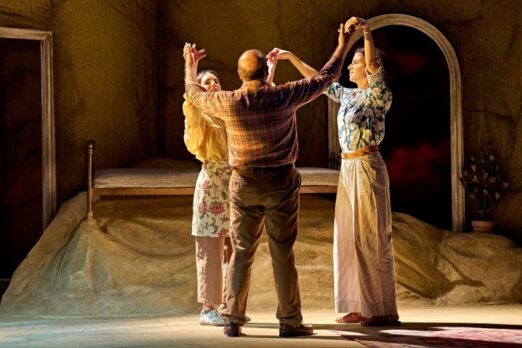
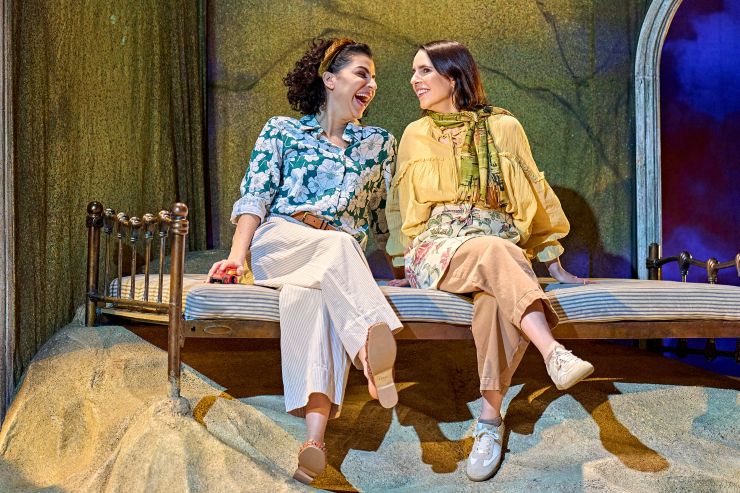
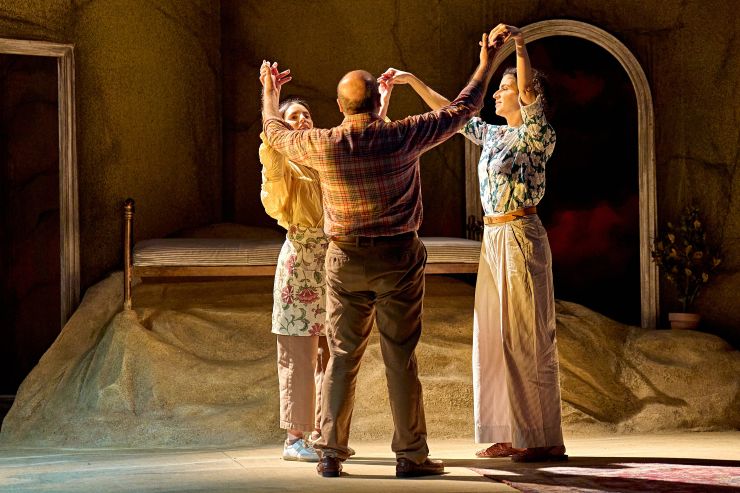
Nuri and Afra’s lovely life in Syria is upended in a moment. They haven’t imagined any other life than the happy one they have, Nuri just having opened a shop together with his cousin Mustafa, to sell the honey from the bees they so lovingly take care of. The bees become their allegory, their aspiration: “the way people have the potential to be”, working in harmony. And in Syria, all it took was a spark, a moment, and it “set the whole country on fire”. As our empathy grows for these terrified ordinary people we are reminded how lucky we are not to live in a part of the world surrounded by war.
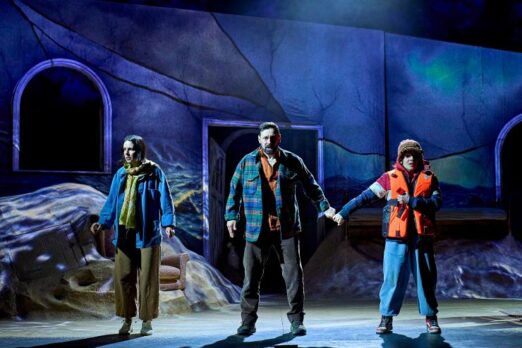
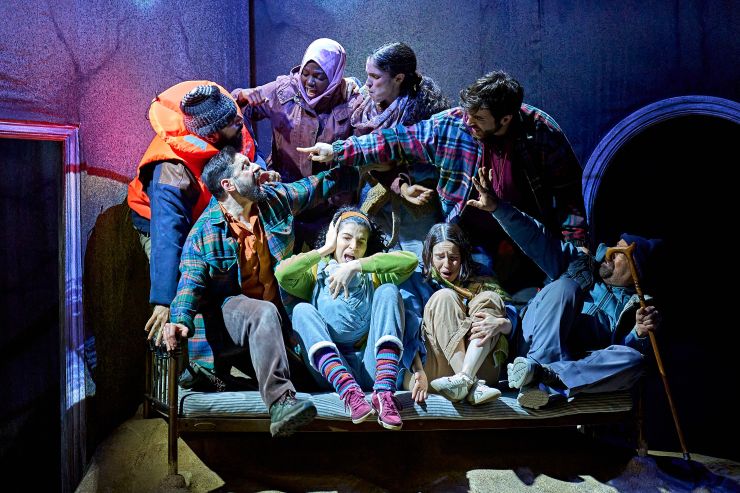
This is an important story, a singled out story of two refugees legitimately seeking asylum in England, and all the harrowing times they have to go through to reach their relatives living in the UK. The treatment they receive from officials is at the hands of people who are cold and ‘just doing their jobs’ yet have the attitude that everyone they meet is a criminal: guilty until proven innocent. On top of the trauma Nuri and Afra have already been through, it’s devaluing at best and demeaning and dehumanising at worst. Plus incredibly authentic and realistic. Just trying to see a doctor is filled with obstacles we cannot imagine, and the uncertainty of whether they will be allowed to stay in this country or go back and be executed in Syria.
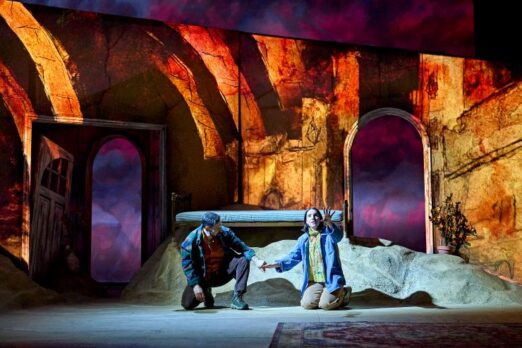
It’s poignant and thought provoking, stimulating interesting discussions after the show. But it’s also filled with light, love and triumph over adversity: “where there are bees, there is light at hope”. It’s a human story of loss and grief, as well as fleeing a war-torn country. These are everyone’s stories: everyone who has experienced loss. Nuri and Afra wear it like a weight that drags them yet propels them through, each carrying their own guilt about what they separately said at a moment before a tragedy, unknowingly separating them, when it could be the warmth and connection that helps them heal.
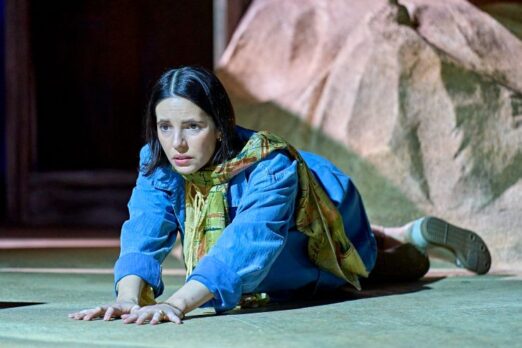
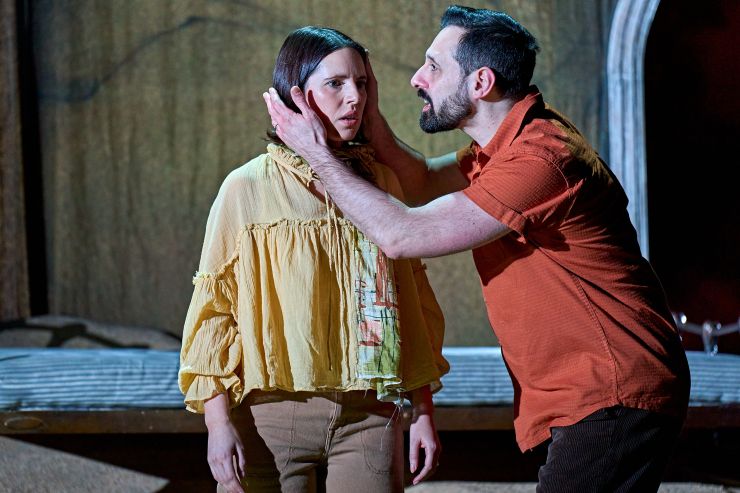
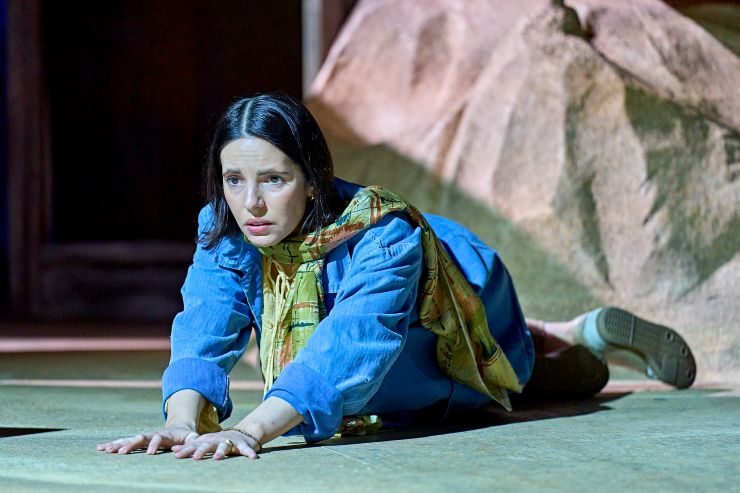
The staging is glorious, it becomes everything, and the projections and lighting design always assist and moves us rather than overpowers. The focus is on the acting of these incredible talents on the stage, where multi-rolling actually works so well and believably that at the end you can’t quite believe so few of them were in it. Adam Sina drives the story as Nuri as if his life depends on it, which in fact it does; such an emotionally raw and real performance. Farah Saffari is such an authentic Afra, vulnerable and numb at the same time. Her final opening up to Nuri, with the most devastating “you forgot to love me” while unconsciously gently moving her wedding ring on her finger is a thing of beauty. Her heart-wrenching “when you belong to someone and suddenly they are gone, who are you?” will hit anyone who has ever lost someone close to them.
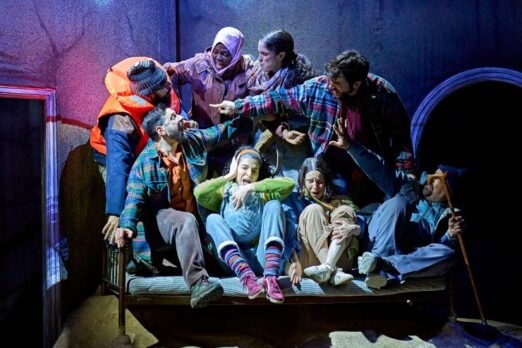
The whole cast are really superb in each of their fully formed multi-rolling characters so different from each other. Anthony Almeida directs with sensitivity never wanting to shock or be gratuitous which helps the story be told rather than ever be too much. Comparisons are likely to be drawn with other productions of refugee stories, but that’s likely to be because there are so few out there. This is a stunning production, gripping and powerful, an absolute must see; filled with authenticity and care, and an insight into a world we are lucky to know very little about. After seeing this production and feeling so sorry for those poor people, we can go home and hug our loved ones a little tighter, text or call them to connect, and feel so lucky to live in safety from war.
Theatre Royal Brighton, 9 June 2026
The Beekeeper of Aleppo runs until 13 June 2026
Photos credit: Manuel Harlan
