
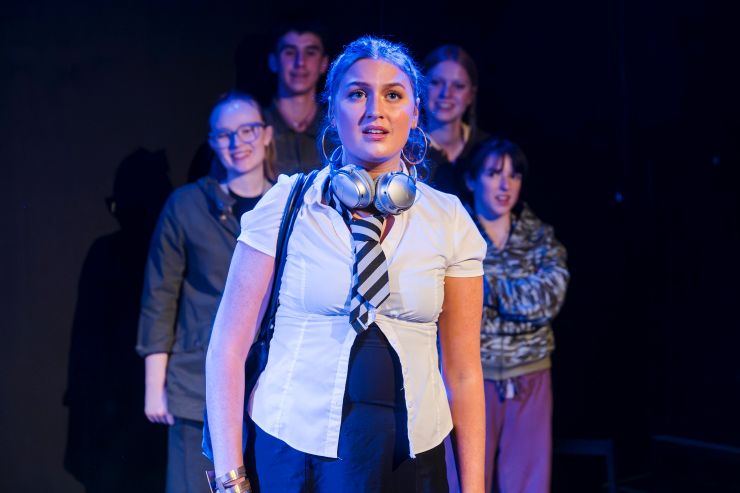
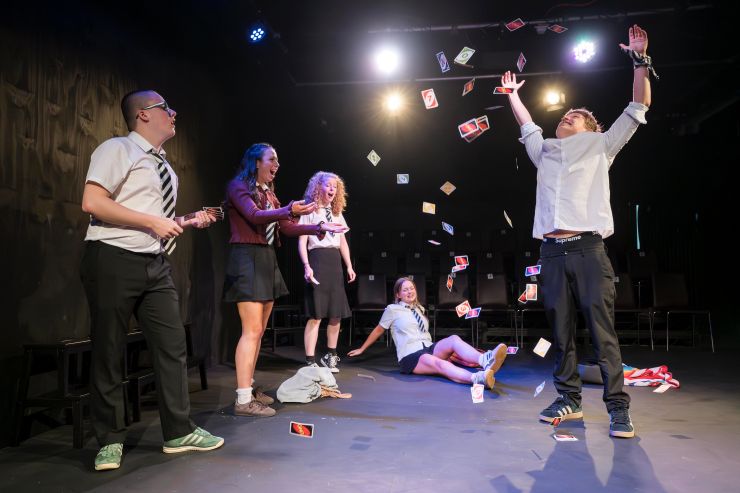
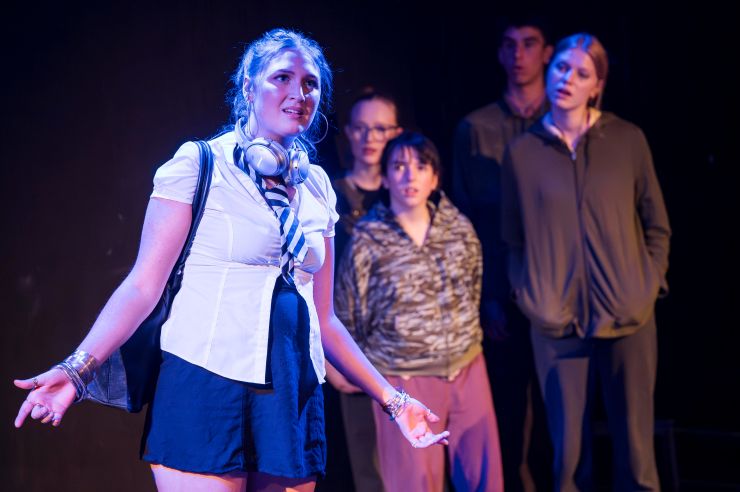
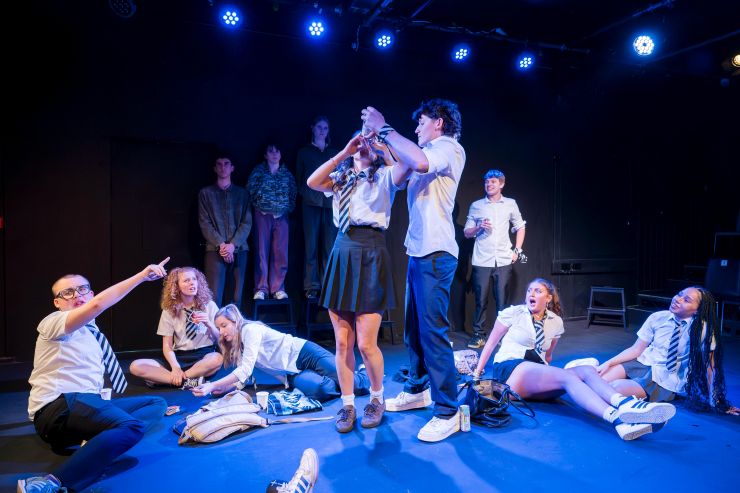
Sometimes theatre can be deliciously thought provoking, as this piece proves. On one level it’s nine sixteen year olds at a beach celebrating their end of year exams, letting loose and contemplating the future: when they encounter Caleb, a homeless young man not much older than them, who they all know, and each has a different reaction to him. What follows is a multilayered natural and authentic unravelling of themselves and their pent up feelings about each other and the world they inhabit.
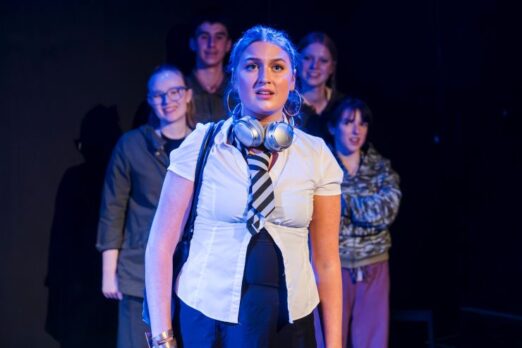
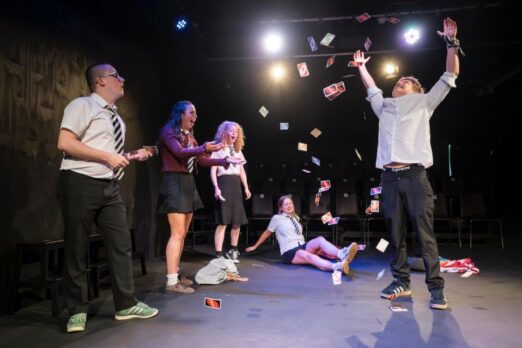
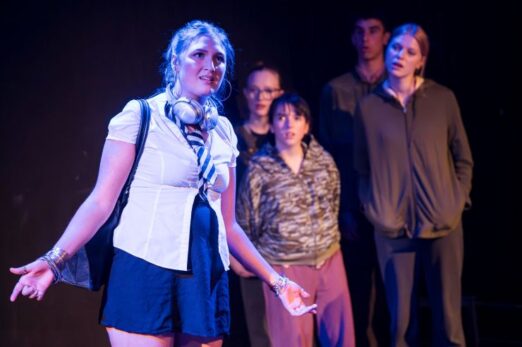
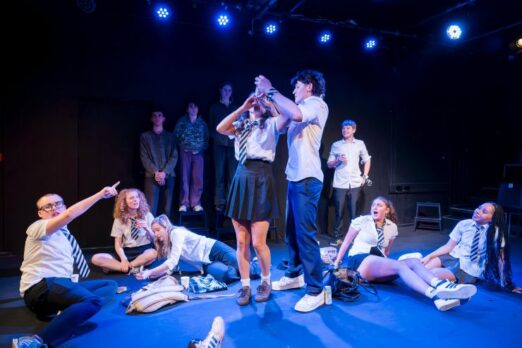
It’s so clear that this piece has been created alongside them and with them in the fact that they own it so totally. They inhabit these characters absolutely, they are fully realised, natural and grounded. They have also been bold in their choices as not all of them are likeable, especially Isaac Howard’s portrayal of Jay which is both real and brave, daring to not only exhibit bullying behaviour but be mostly unlikeable until a crucial moment where he unapologetically tells of why his attitude is what it is. This is a super choice, helping his story land with such authenticity. We suddenly realise his attacks are a defence, a shield against feeling what he is avoiding feeling.
The transitions between scenes are so clear and clean they are a joy. The story of the evening celebrating at the beach is intercut with the repercussions and present day moving on from that moment, which makes such interesting theatre. The movement work here is stunning, including slow motion scenes in unison. Another genius aspect is that we never see the homeless man Caleb, instead we hear a chorus of four voices in unison as they move on the periphery of the space. Such beautiful metaphors for how we see those on the periphery of society, or don’t see them, which is the point, representative of anyone. But it’s made with subtlety rather than preaching. The chorus also multi role into teachers, police and therapists with good clarity.
The story is gripping, but more than that, like great art, it reflects us back to ourselves. We make judgements on these young people we see, we don’t like Jay, we feel sorry for Caleb. But life is more nuanced than that and so is this play. We are asked to review our own opinions with more information, challenged about those assumptions we made. There is a great deal about privilege in this play which is extremely interesting: the most privileged of them having no idea how privileged they are, as Michaela played by Ima Lucas points out in an impassioned discussion with her bewildered boyfriend played beautifully by Sunny Andrews.
Everyone has something going on their life, everyone’s actions are because of something. And more often than not, you’ll never know what the something is. Perhaps the invitation here is to think before being judgemental. There’s guilt, there’s blame, there’s recriminations: there’s drunkenness – Dora King playing a particularly super drunk; and drama. And reminders that that was us too: take away the mobile phones, there we were: trying to fit in, trying to be liked, some being cool, some having a partner, some feeling intense pressure to choose the right future at 16 for the rest of their life. And maybe it doesn’t, or shouldn’t, take an extreme occurrence for us to pause and approach people, or life in general, with compassion and kindness, rather than instant judgements.
BHOS Theatre Hub, 9 May 2026
When The Tide Comes In runs 23 and 24 May 2026 in Brighton
Photos credit: Robin Savage
